The Unofficial Job That Keeps a Group Game Moving
A group game facilitator can spot a stall, offer a simple reset and share the work, so play can continue without one person managing everyone.

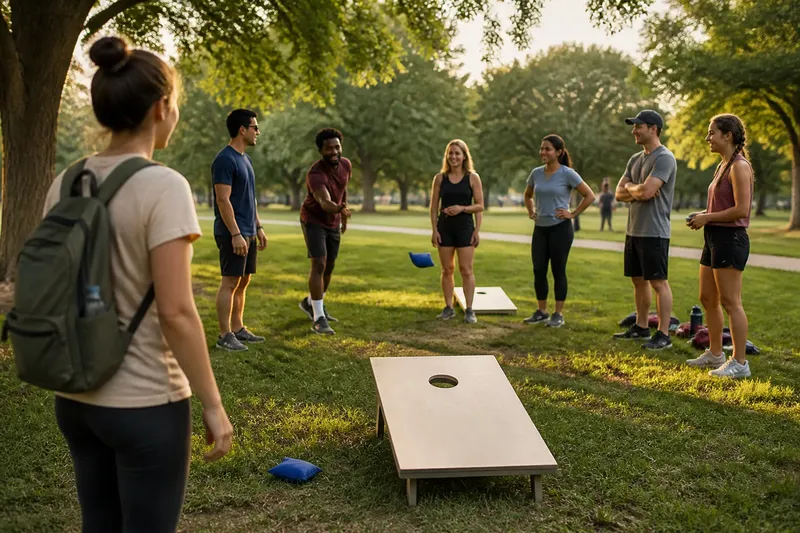
During a casual game of keep-away, the ball rolls beside a bench and everyone pauses. A group game facilitator can notice the practical snag, offer a brief prompt and return to playing once the group has a next move. The role is not to manage the rules or the mood. It is a light-touch way to help players get unstuck in the moment.
A facilitator notices what needs doing now
Someone may have started the game, explained a rule or brought the ball. That does not make them responsible for every lull. Moment-to-moment facilitation is narrower: notice what has stopped play, say what is unclear, and offer a useful next action.
Think of the role like holding a door open. You make it easier for others to move through, but do not decide who must enter or where they should go. In a game, that means offering a possibility without insisting the group take it.
Use ordinary language rather than assigning a permanent title. “Want to pause and decide who fetches the ball?” sounds lighter than announcing that someone is now in charge. The invitation can come from any player, and it can be declined without a fuss.
Notice the practical stall before speaking
A quiet moment is not automatically a problem. Players may be catching their breath, thinking about a move or enjoying a slower patch. Look for something concrete: the ball has stopped, nobody knows whose turn it is, or players are waiting because they are unsure how to restart.
Name what is happening rather than guessing how anyone feels. “We’ve lost track of the next turn” is more useful than “You all look bored.” It gives the group something observable to respond to without putting anyone on the spot.
Give the pause a beat. If someone is already retrieving the ball or clarifying the turn, there may be nothing to add. A facilitator does not need to fill every silence; sometimes the best response is to let players sort out a small pause themselves.
Offer a prompt that gets play moving
A broad “What does everyone want to do?” can feel like homework when the game has stalled. Instead, offer two or three clear next moves that fit the immediate snag: carry on, pause briefly, or stop for now. Keep the choices neutral and easy to refuse.
For a minor uncertainty, a practical prompt can be enough: “Shall we go round from here?” or “Would someone like to fetch the ball, or should we move closer?” The aim is not to settle the group’s preferences for the rest of the game. It is to help them choose what happens next.
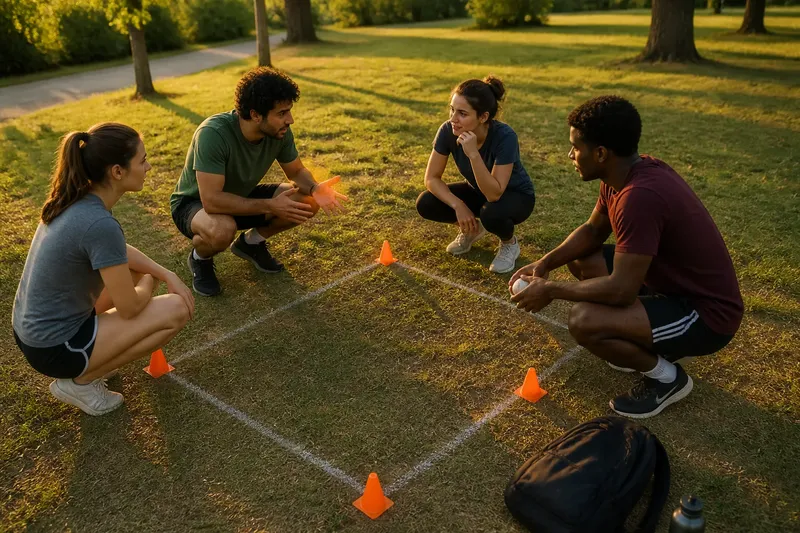
Say you are playing an invented outdoor passing game and a throw lands near a bench, out of easy reach. One player asks, “Shall we pause while someone gets it, or move the passing circle closer?” If the group chooses to move, players shift nearer and can resume; if nobody wants to move, they can pause and decide whether to fetch the ball or finish.
Keep immediate support separate from changing the game
Facilitating a moment does not mean redesigning the activity. If the next turn is unclear, ask the group to name who goes next. If players disagree about what counts as a catch, state that the disputed point is holding up play and invite them to choose whether to pause or continue under their current understanding.
Longer conversations about rules or format belong to the group, not to the person who happened to notice the stall. You can make space for that conversation by asking, “Do you want to settle this now, or carry on and talk after the round?” Then let the players decide.
When equipment or the playing area creates a practical concern, do not improvise past it. Pause and check the maker’s instructions or relevant local guidance where they apply. A facilitator can point out the concern; the group can decide how to proceed safely.
Share the moment without assigning responsibility
The role becomes tiring if one person is expected to spot every pause and keep the game moving. Make it normal for any player to name a snag or offer a prompt. Someone waiting at the edge may notice a missed turn that the person holding the ball has not seen.
Sharing the role does not mean calling on people in turn to manage the group. That can feel like an obligation. Keep invitations open: “Anyone know whose turn is next?” If no one answers, wait or offer a simple option rather than appointing someone who has not volunteered.
Players can also decide how they take part. Someone may want to watch, sit out a round or head off. A facilitator can make those choices easy to state, without asking for an explanation or trying to persuade them back in.
What can a facilitator say when play stalls?
What should I say when nobody takes a turn?
State what is unclear, then offer a simple next move: “We’ve lost the order; shall we go round the group from here?” If no one responds, wait rather than appointing someone who has not volunteered.
How can I raise a rule disagreement without taking sides?
Name the point delaying play, without judging who is right: “We’re not sure whether that catch counts.” Then ask whether players want to pause to discuss it or continue for now and talk after the round.
What if people want different next moves?
Offer a choice that allows different participation, such as letting one person sit out while others continue. If the preferences cannot fit together, pause and let each person decide whether to rejoin, watch or leave.
When should I stop prompting?
Stop when players have chosen what to do, or when nobody wants to discuss it. The facilitator’s job is to make a next move easier to voice, not to keep asking until everyone sounds enthusiastic.
Step back once players have a next move
When play resumes, the person who made the suggestion can rejoin as a player. There is no need to announce that the prompt worked or keep checking whether everyone is enjoying themselves. Let the group carry on, and allow someone else to speak up if another practical snag appears.
A group game facilitator helps most by making the next action clear without taking over the activity. Keep the prompt brief, accept the group’s answer and step back. That small role can make a pause easier to handle while leaving the game, its rules and its direction with the players.