Two-Minute Rounds or One Long Game?
Two-minute rounds or one long game? Compare resets, momentum and entry points to choose a play rhythm that fits your activity and keeps decisions simple.
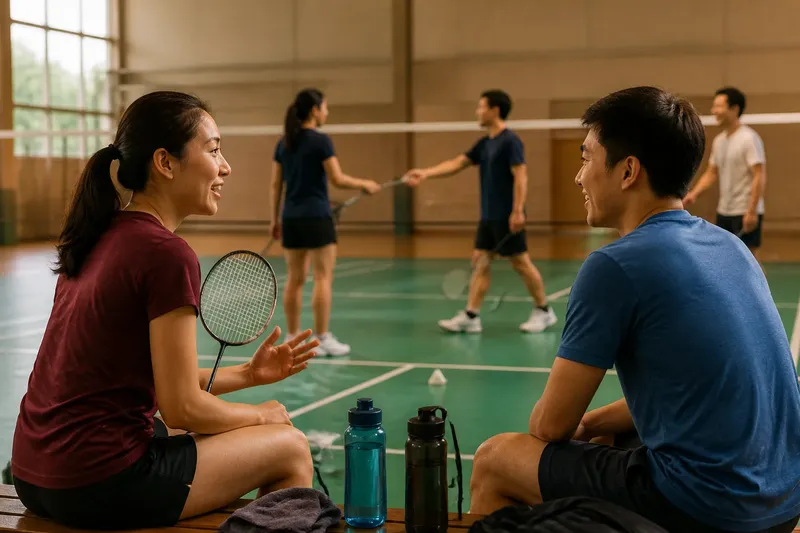
The rally is finally flowing when the agreed timer sounds. In a casual badminton game, that beep might offer a tidy chance to change partners—or cut short the very exchange everyone was enjoying. Choosing between two-minute rounds and one long game is less about managing turns than finding a rhythm that suits the activity.
Short rounds create frequent boundaries. Continuous play lets movement and decisions build without a scheduled reset. The right choice depends on how much structure the group wants and whether pauses help or interrupt the experience.
Short rounds create a clear beat
A short round gives the session a repeated shape: start, play, pause, then begin again. A timer, a set number of rallies or another simple stopping point can provide that beat. Players know when the format will change, even if the game itself is unpredictable.
Those boundaries can make an unfamiliar activity easier to approach. Someone learning how to serve in badminton can focus on the current spell rather than wondering how long the game will continue. A pause also gives the group a natural moment to change partners, check the rules or take a breath.
The cost is interruption. A lively rally may end because the round is over, and repeated resets can make a game feel like a sequence of starts rather than one unfolding activity. Like changing tracks in the middle of a song, the break can be useful or jarring depending on what the group wants to hear.
Continuous play gives momentum room to grow
With no planned reset, players can settle into the same activity and respond to what is happening as it unfolds. In a gentle passing game, for instance, the group can try different routes without stopping to reorganise after each brief spell.
Continuity can suit people who enjoy concentrating on one shared flow. It also avoids pauses that have no clear purpose. But a long stretch may feel shapeless if nobody knows when a natural stopping point will arrive, or if the group wants a chance to alter the format.
Continuous play does not have to mean playing without any pause at all. The group can agree to stop at the end of a game, after a particular round of the activity or whenever someone asks for a breather. The important distinction is whether pauses are built into a recurring rhythm or happen only when needed.
Choose a rhythm that matches the activity
Before starting, consider the game's natural shape. A point-based activity already has frequent endings; a cooperative movement game may flow better without a timer. Then ask what kind of interruption would help rather than merely what is easiest to organise.
- If the activity has clear natural endings, such as points or completed laps, use those as pause points; if each ending already breaks the flow, let play continue across them.
- If players are learning a new move, set a simple stopping point for a quick reset; if they are beginning to repeat the move confidently, allow a longer uninterrupted spell.
- If the group wants to change partners or roles often, choose short rounds; if changing roles would disrupt a shared sequence, keep the arrangement in place longer.
- If a timer would be hard to hear or remember, use an observable event such as the end of a rally; if the activity has no natural event, agree on a simple verbal cue.
- If people are eager to continue at each pause, make the next stretch longer; if they use the pause to catch their breath or clarify what comes next, keep the boundary.
- If someone may need to step away, name a convenient point for stopping and rejoining; if the group can pause freely, agree that anyone may ask for a break.
Say six people have one badminton court, and two are still learning to serve. The group begins with short spells, using the end of a rally as the cue to pause and change pairings. At each pause, they notice whether the learners are getting another chance to practise before the game moves on. If changing pairs after every rally makes the play feel fragmented, they keep each pairing together for a longer spell and change only at the next natural break. The result is a choice based on what the group can observe: whether the rhythm supports practice or keeps interrupting it.
Which play rhythm suits your group?
Are timed rounds better than stopping after a point?
Timed rounds suit activities without a natural ending, while points and completed sequences offer a stopping cue built into the game. Choose the cue that is easiest for everyone to recognise and least likely to interrupt an enjoyable moment.
How can a group tell if rounds are too short?
If play keeps stopping just as people settle into the activity, try waiting for a natural event before resetting. If the group welcomes the pause and uses it to make a clear change, the round length may be doing useful work.
Can a continuous game still have planned pauses?
Yes. A continuous game can run through several points or phases, then pause at an agreed natural boundary. That keeps momentum without asking anyone to continue when they need a break.
What should the group change if the rhythm feels wrong?
Change one feature at a time, such as the length of a spell or the cue for pausing. If the new rhythm makes the activity easier to follow, keep it; if it creates more interruption or uncertainty, return to the previous cue.
Let pauses guide the next adjustment
Notice what people do when play stops. Do they naturally stretch, talk through a rule or take time to reset, or do they look ready to carry straight on? That small observation says more about the group's preferred rhythm than an abstract vote before anyone has played.
Keep the adjustment modest. If an activity needs more breathing space, lengthen the stretch between pauses. If players lose track of how the game is unfolding, add a recognisable stopping cue. For two-minute rounds or one long game, the useful decision is which rhythm makes the activity feel clear and satisfying to continue.