Why a Game Feels Easier When the First Move Is Obvious
A clear first move helps newcomers join an informal game without guessing. Learn how to shape the opening so people can take part at their own pace.
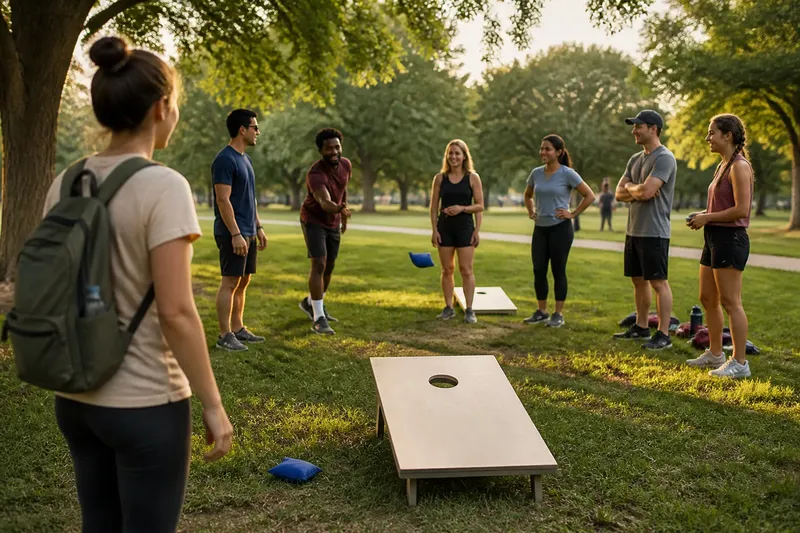
You arrive at a park as a group begins a game of beanbag toss. The players know whose turn comes next, but you do not. A simple first move can make joining an informal game feel like a choice rather than a guess.
Give the game a clear first action
People arriving mid-game need to work out where to begin, what to do and when to take a turn. Show one ordinary turn at an unhurried pace. In a passing game, for instance, someone can receive the ball, pass it to a nearby player and move into open space.
Keep the spoken instruction brief: “Start here, pass to anyone, then find an open spot.” Save details that do not affect the first turn for later. The demonstration is like leaving a door propped open: it shows a way in without requiring everyone to follow the same route afterwards.
Make the starting place easy to find
Choose a place a newcomer can see from the edge: a gap in a circle, a clear patch beside the playing area or a flat cone near the next turn. If the game has no fixed front, point out the space available now rather than assigning someone a permanent position.
Say you are setting up an informal beanbag-toss game and a friend arrives while others are taking turns. Put one unused beanbag beside a clear place in the circle and say, “You can start here when you’re ready.” The expected result is easy to notice: your friend can see where to stand and which beanbag is available, without asking the group to stop for a long explanation.
Let the equipment explain the opening
Set out the object needed for the first action: a ball ready to pass, a beanbag beside the starting place or a soft marker showing where to stand. Keep spare or optional equipment to one side so the layout does not look like another puzzle to solve.
If an object could be mistaken for a boundary or target, explain its purpose in a plain sentence. The aim is to make the first action easier to read, not to leave people guessing what the equipment means.
Offer a first turn that allows room to learn
Make the opening action understandable before making it demanding. A gentle roll, a short pass or a choice of direction can help someone join while they are still learning the group’s rhythm. Once they have taken part, they can choose a longer pass or a more active role if they want one.
“You can roll it from here, or pass it to someone nearby” gives a clearer choice than “Just try it.” Neither option has to be framed as the proper way to play. The person can choose what feels comfortable without being put on the spot.
Make the invitation personal and easy to decline
A group may think it has left a gap, while someone arriving still sees a closed circle of familiar faces. Connect the open space to the person with a direct invitation: “There’s room here if you’d like a turn.” Then pause instead of repeating the offer.
Point to the starting place and mention that watching for a round is fine too. If the person steps in, show the first action. If they stay nearby, keep playing and leave the invitation open without making their choice a group discussion.
Choose the opening cue for the game you are playing
How much should you explain before a first turn?
Explain where to begin, what to do and any detail that changes whether the person can take part safely. Leave less urgent choices until they matter during play.
What if there is no obvious starting place?
Pick a temporary spot at the edge of the activity and name it aloud. A gap in a circle or a place beside the equipment can work if it is visible and available.
Should someone demonstrate every turn?
Usually, one short demonstration is enough to show the opening. If someone has begun, let them play rather than repeating the explanation over their shoulder.
What if someone would rather watch?
Let them watch without making it a subject for the group. Keep the starting place available in case they decide to join later.
Keep the first move visible as play continues
Notice what people do after the invitation. If a newcomer moves towards the open place or reaches for the waiting object, the cue is probably clear enough to begin. If people still hover at the edge, point out the space again or shorten the instruction rather than adding rules that do not affect the first turn.
For a new informal game, one clear action and a recognisable place to start can make the first move easier to understand. Keep that cue available as new people arrive, and let each person decide when they are ready to use it.